From Other Sources · Leadership & Work
How to Avoid Performance Punishment
Shared from George Stern on LinkedIn
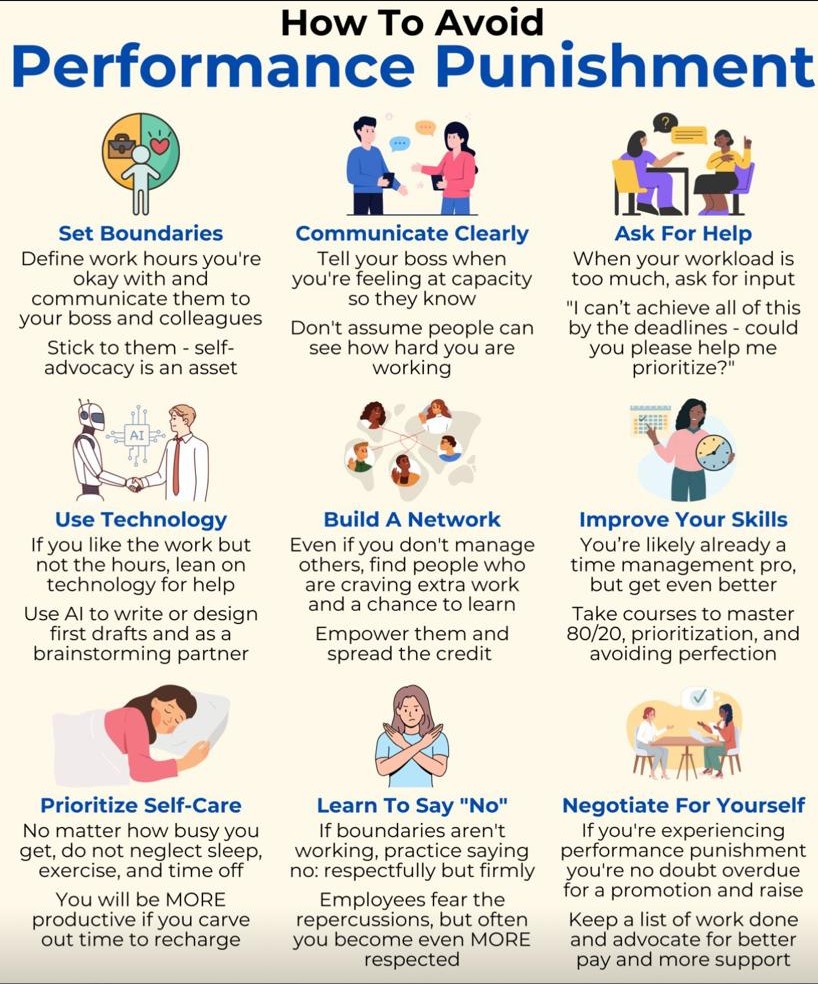
The picture in words
Nine illustrated tips; the first, setting boundaries, is in the text. The others:
- Communicate clearly: say when you’re at capacity.
- Ask for help: get input on priorities.
- Use technology: AI for drafts and brainstorming.
- Build a network: share work and credit with eager learners.
- Improve your skills: prioritising, the 80/20 rule, less perfectionism.
- Prioritise self-care: protect sleep, exercise and breaks.
- Learn to say “no”: politely but firmly.
- Negotiate for yourself: log your work; seek promotion and a raise.
Being great at your job can backfire,
But these 9 steps help avoid the worst:
Performance punishment is a real problem.
It's when you do great work,
Which gets you praise and recognition,
But also:
- More work
- Which leads to more success
- Which brings even more work
- And more responsibilities and expectations
- But no more pay or change in role
You become the go-to person for your boss,
Which is great...until it's not.
Until you get worn down, resentful of your colleagues with lighter loads, burned out, and your performance and life suffer.
You're overworked and underpaid.
Have you experienced performance punishment at work?
The solution is obviously not to be less good at your job.
Instead, here are 9 concrete actions you can take to reduce the impact of performance punishment:
- Set boundaries
Define work hours you're comfortable with and communicate them to your boss and colleagues
Stick to them - self-advocacy is an asset
- Communicate proactively
Tell your boss when you're feeling at ca …
Source: George Stern on LinkedIn.