From Other Sources · Character & Communication
How to Have Courageous Conversations
Shared from Vaughan Broderick on LinkedIn
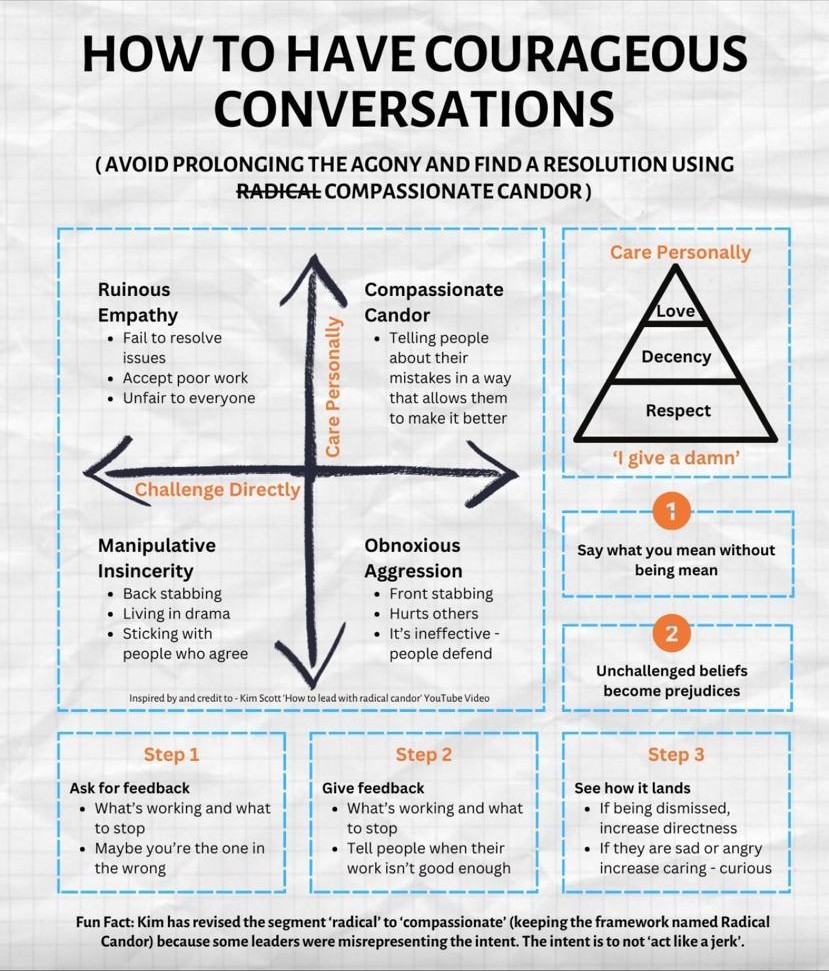
The picture in words
A two-by-two grid crosses caring personally with challenging directly. Doing both is Compassionate Candor, naming mistakes so people can improve; care alone (Ruinous Empathy) tolerates poor work, challenge alone (Obnoxious Aggression) hurts, and neither (Manipulative Insincerity) breeds backstabbing.
A pyramid builds caring from respect through decency to love. Notes add that unchallenged beliefs become prejudice and that Kim Scott swapped “radical” for “compassionate” after it was misrepresented.
Many teams suck at constructive accountability.
Here's how to have hard conversations and care for your co-workers:
"Say what you mean without being mean"
A simple formula.
So, why is it so hard for people to hold each other accountable yet to preserve the relationship?
Ego?
Values?
Worldview?
Confidence?
Maybe all of it.
Having a structure to lean on is a powerful way to create a safe space and build confidence.
That's where Radical Candor comes in. A framework to take a step forward and help others deliver their best work.
More than that, it's being kind to everyone involved.
Try Kim Scott's 3 step approach:
- Ask for feedback
What’s working and what to stop
Maybe you’re the one in the wrong
- Give feedback
What’s working and what to stop
Tell people when their work isn’t good enough
- See how it lands
If being dismissed, increase directness
If they are sad or angry increase caring
and stay curious
The benefits:
Create a culture of Compassionate Candor
Build a cohes …
Source: Vaughan Broderick on LinkedIn.