From Other Sources · Leadership & Work
Effective Teamwork: Proven Teamwork Practices
Shared from Roger Mark Thompson on LinkedIn

Text of the carousel
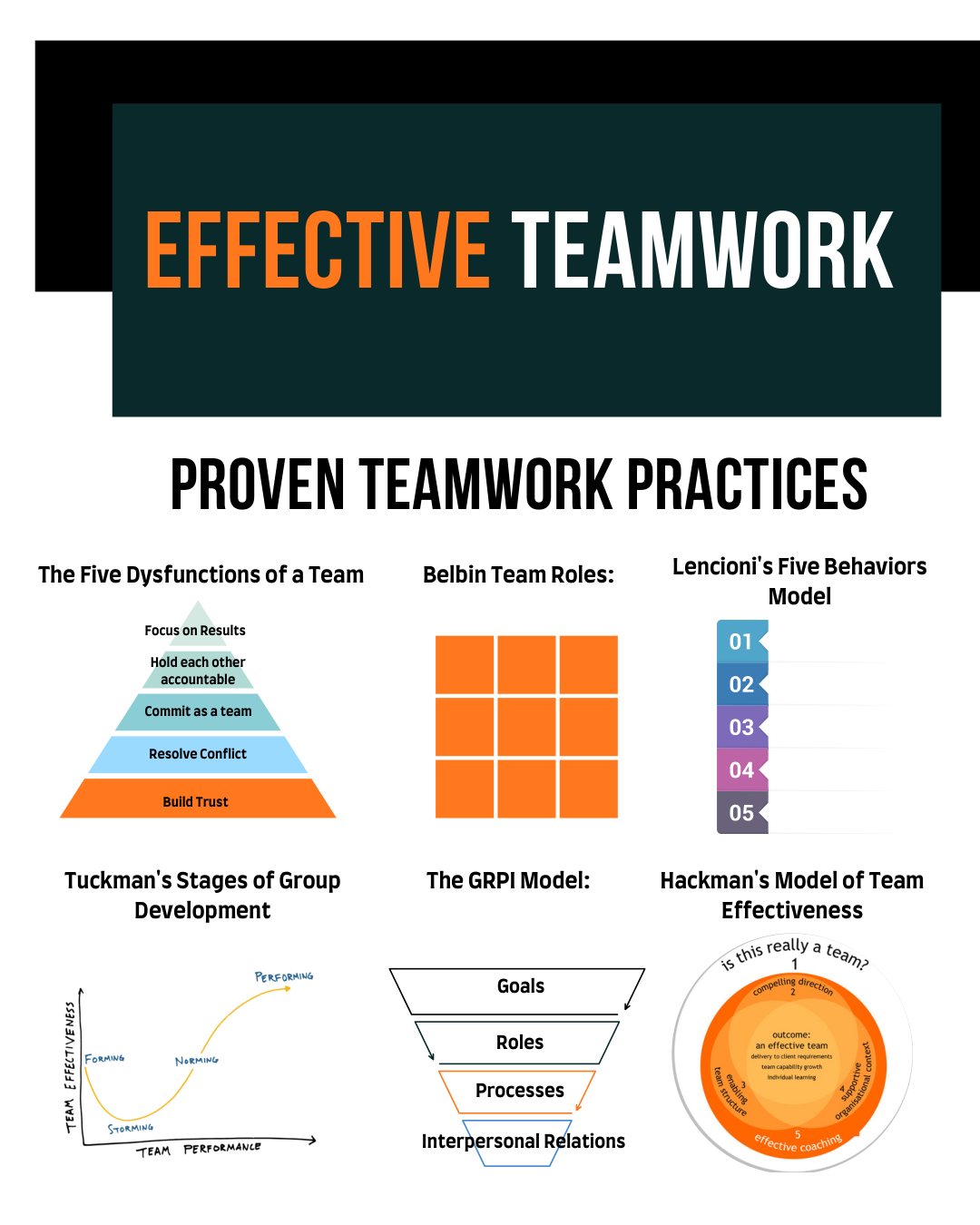
Page 1. EFFECTIVE TEAMWORK PROVEN TEAMWORK PRACTICES The Five Dysfunctions of a Team Do It Delete It Build Trust Resolve Conflict Commit as a team Hold each other accountable Focus on Results Belbin Team Roles: Lencioni's Five Behaviors Model Tuckman's Stages of Group Development Hackman's Model of Team Effectiveness The GRPI Model: Interpersonal Relations Processes Roles Goals
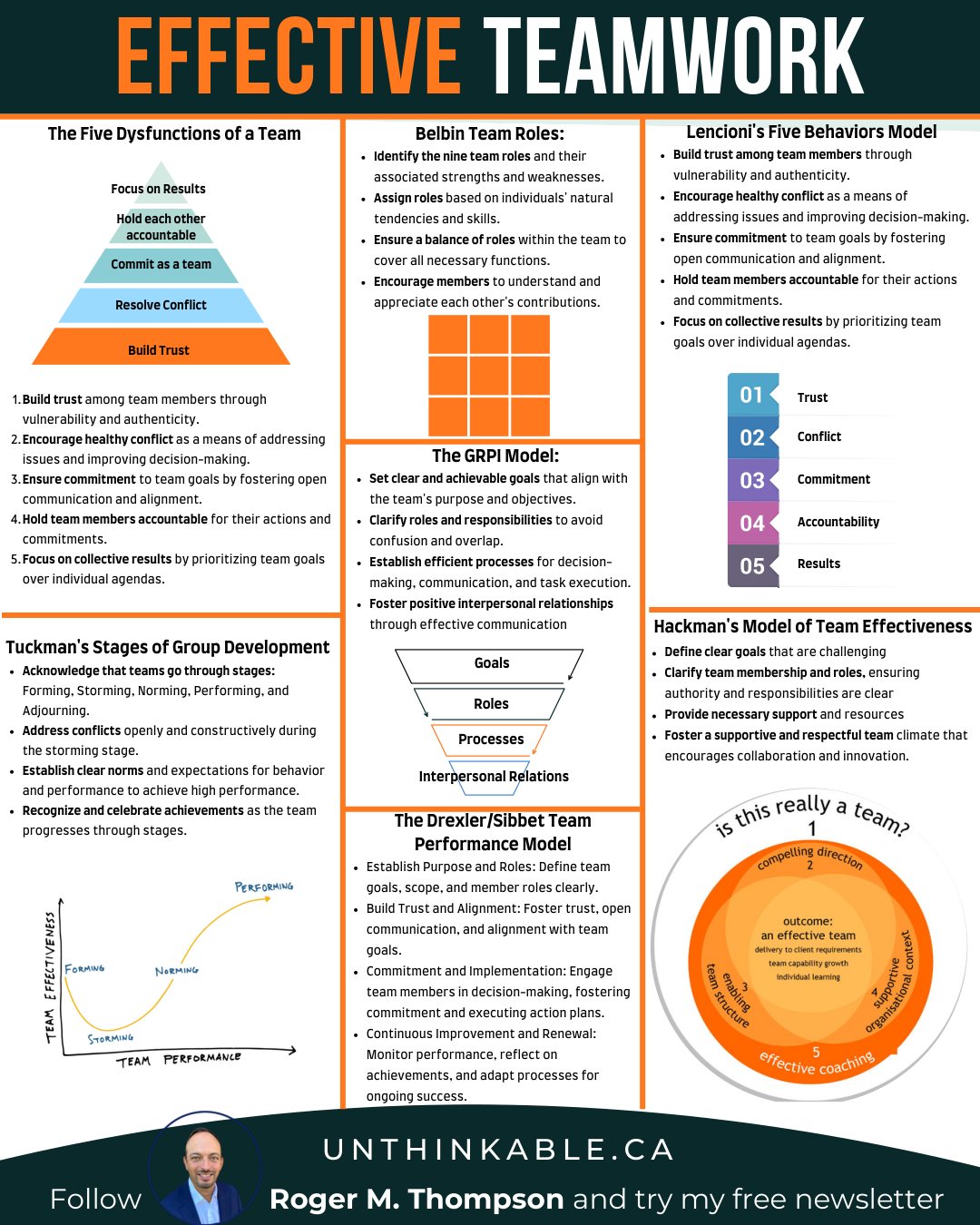
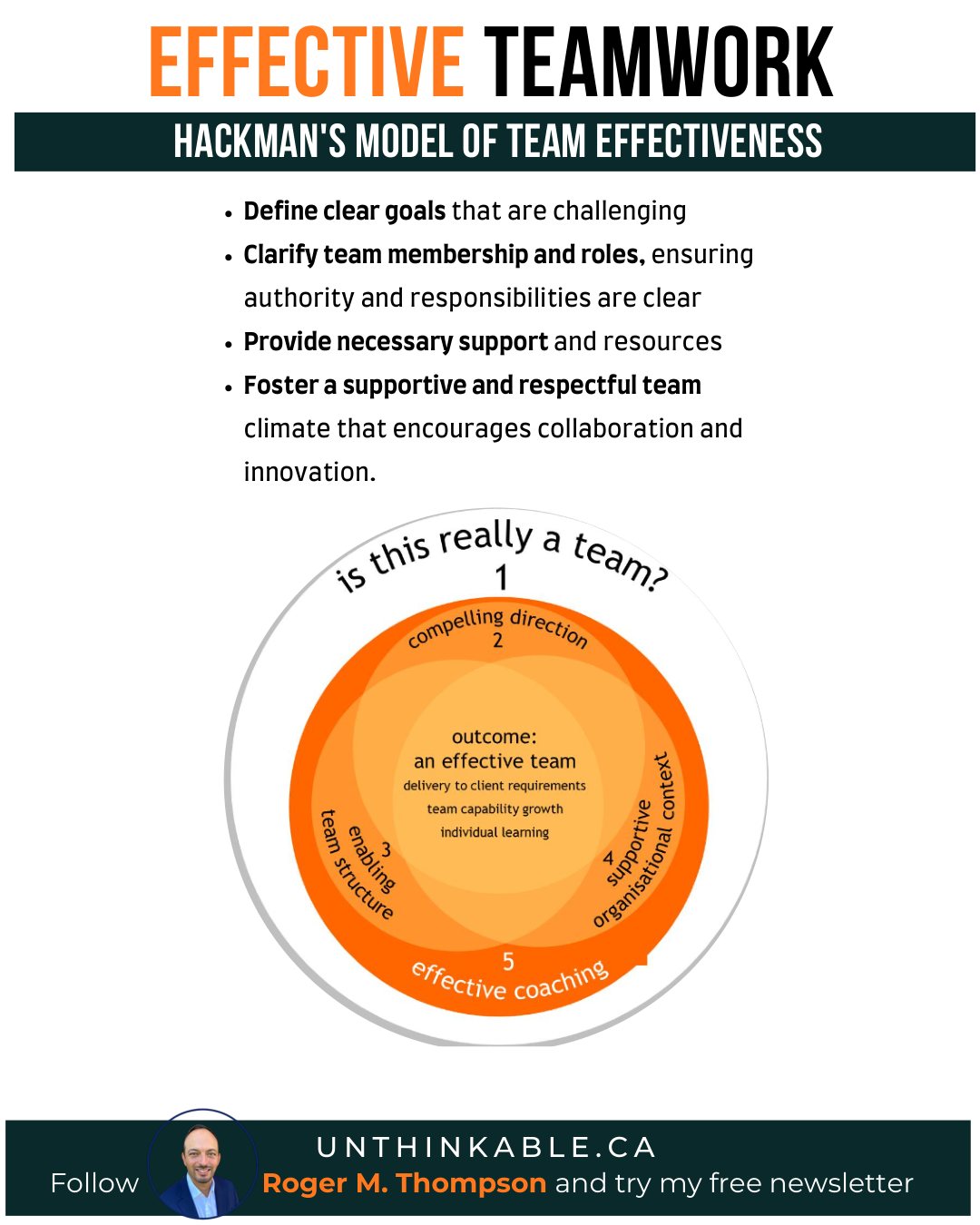
Page 2. EFFECTIVE TEAMWORK The Five Dysfunctions of a Team Do It Delete It Build Trust Resolve Conflict Commit as a team Hold each other accountable Focus on Results The GRPI Model: Set clear and achievable goals that align with the team's purpose and objectives. Clarify roles and responsibilities to avoid confusion and overlap. Establish efficient processes for decision- making, communication, and task execution. Foster positive interpersonal relationships through effective communication Interpersonal Relations Processes Roles Goals Follow Roger M. Thompson and try my free newsletter U N T H I N K A B L E. C A Belbin Team Roles: Identify the nine team roles and their associated strengths and weaknesses. Assign roles based on individuals' natural tendencies and skills. Ensure a balance of roles within the team to cover all necessary functions. Encourage members to understand and appreciate each other's contributions. Build trust among team members through vulnerability and authenticity. 1. Encourage healthy conflict as a means of addressing issues and improving decision-making. 2. Ensure commitment to team goals by fostering open communication and alignment. 3. Hold team members accountable for their actions and commitments. 4. Focus on collective results by prioritizing team goals over individual agendas. 5. Acknowledge that teams go through stages: Forming, Storming, Norming, Performing, and Adjourning. Address conflicts openly and constructively during the storming stage. Establish clear norms and expectations for behavior and performance to achieve high performance. Recognize and celebrate achievements as the team progresses through stages. Tuckman's Stages of Group Development Hackman's Model of Team Effectiveness Lencioni's Five Behaviors Model Build trust among team members through vulnerability and authenticity. Encourage healthy conflict as a means of addressing issues and improving decision-making. Ensure commitment to team goals by fostering open communication and alignment. Hold team members accountable for their actions and commitments. Focus on collective results by prioritizing team goals over individual agendas. The Drexler/Sibbet Team Performance Model Establish Purpose and Roles: Define team goals, scope, and member roles clearly. Build Trust and Alignment: Foster trust, open communication, and alignment with team goals. Commitment and Implementation: Engage team members in decision-making, fostering commitment and executing action plans. Continuous Improvement and Renewal: Monitor performance, reflect o n achievements, and adapt processes f or ongoing success. Trust Conflict Commitment Accountability Results Define clear goals that are challenging Clarify team membership and roles, ensuring authority and responsibilities are clear Provide necessary support and resources Foster a supportive and respectful team climate that encourages collaboration and innovation.
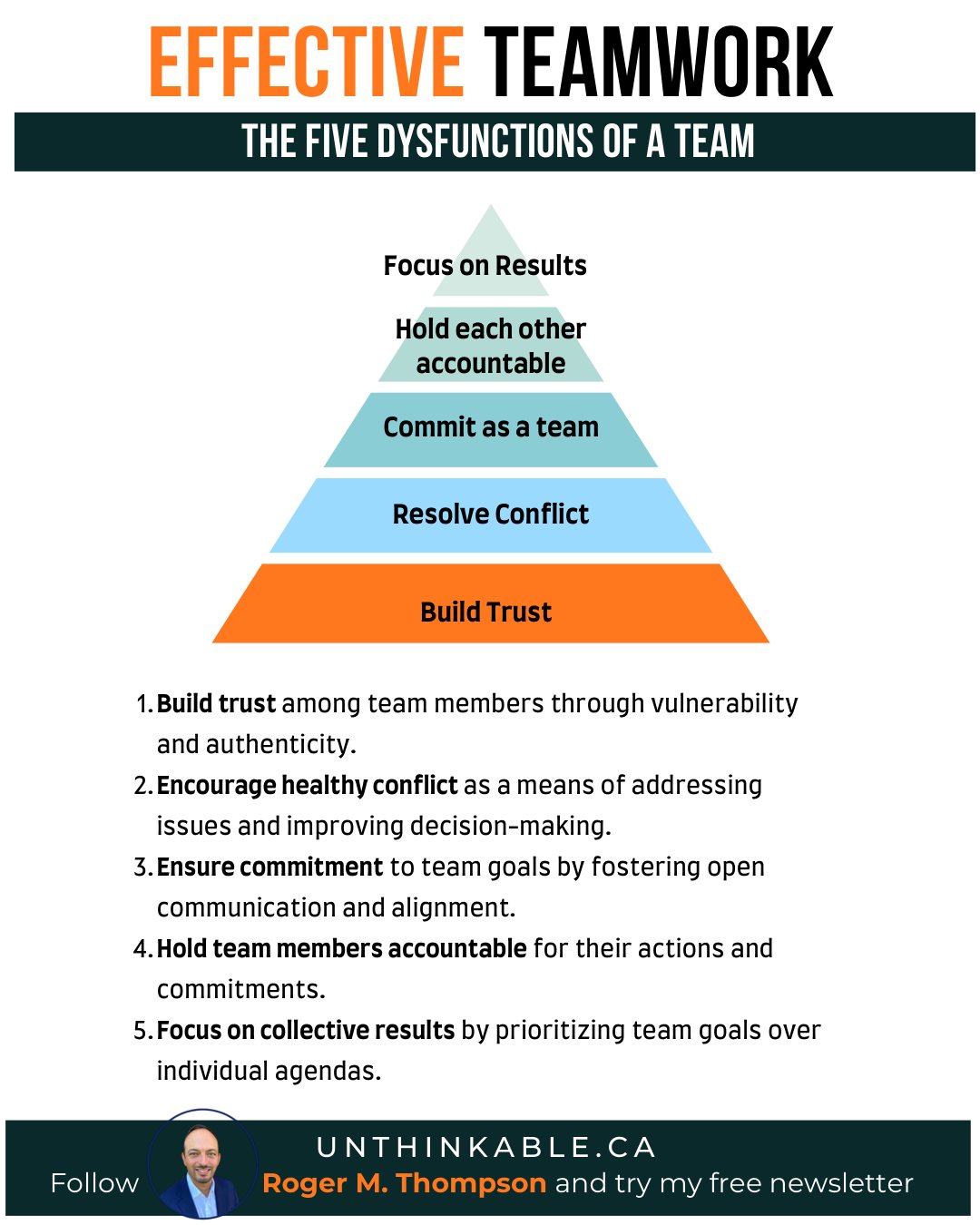
Page 3. Follow Roger M. Thompson and try my free newsletter U N T H I N K A B L E. C A EFFECTIVE TEAMWORK THE FIVE DYSFUNCTIONS OF A TEAM Do It Delete It Build Trust Resolve Conflict Commit as a team Hold each other accountable Focus on Results Build trust among team members through vulnerability and authenticity. 1. Encourage healthy conflict as a means of addressing issues and improving decision-making. 2. Ensure commitment to team goals by fostering open communication and alignment. 3. Hold team members accountable for their actions and commitments. 4. Focus on collective results by prioritizing team goals over individual agendas. 5.
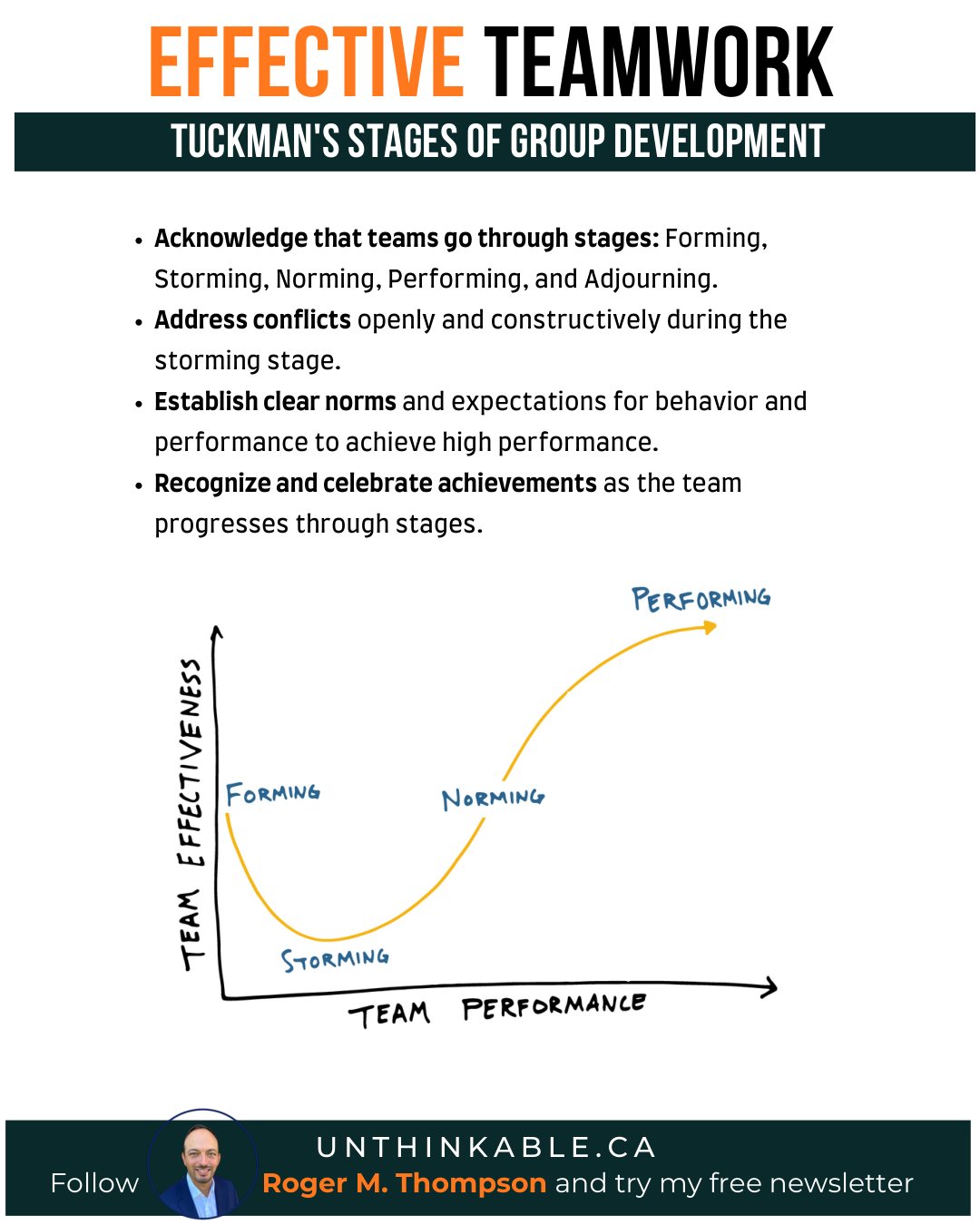
Page 4. Follow Roger M. Thompson and try my free newsletter U N T H I N K A B L E. C A EFFECTIVE TEAMWORK TUCKMAN'S STAGES OF GROUP DEVELOPMENT Acknowledge that teams go through stages: Forming, Storming, Norming, Performing, and Adjourning. Address conflicts openly and constructively during the storming stage. Establish clear norms and expectations for behavior and performance to achieve high performance. Recognize and celebrate achievements as the team progresses through stages.
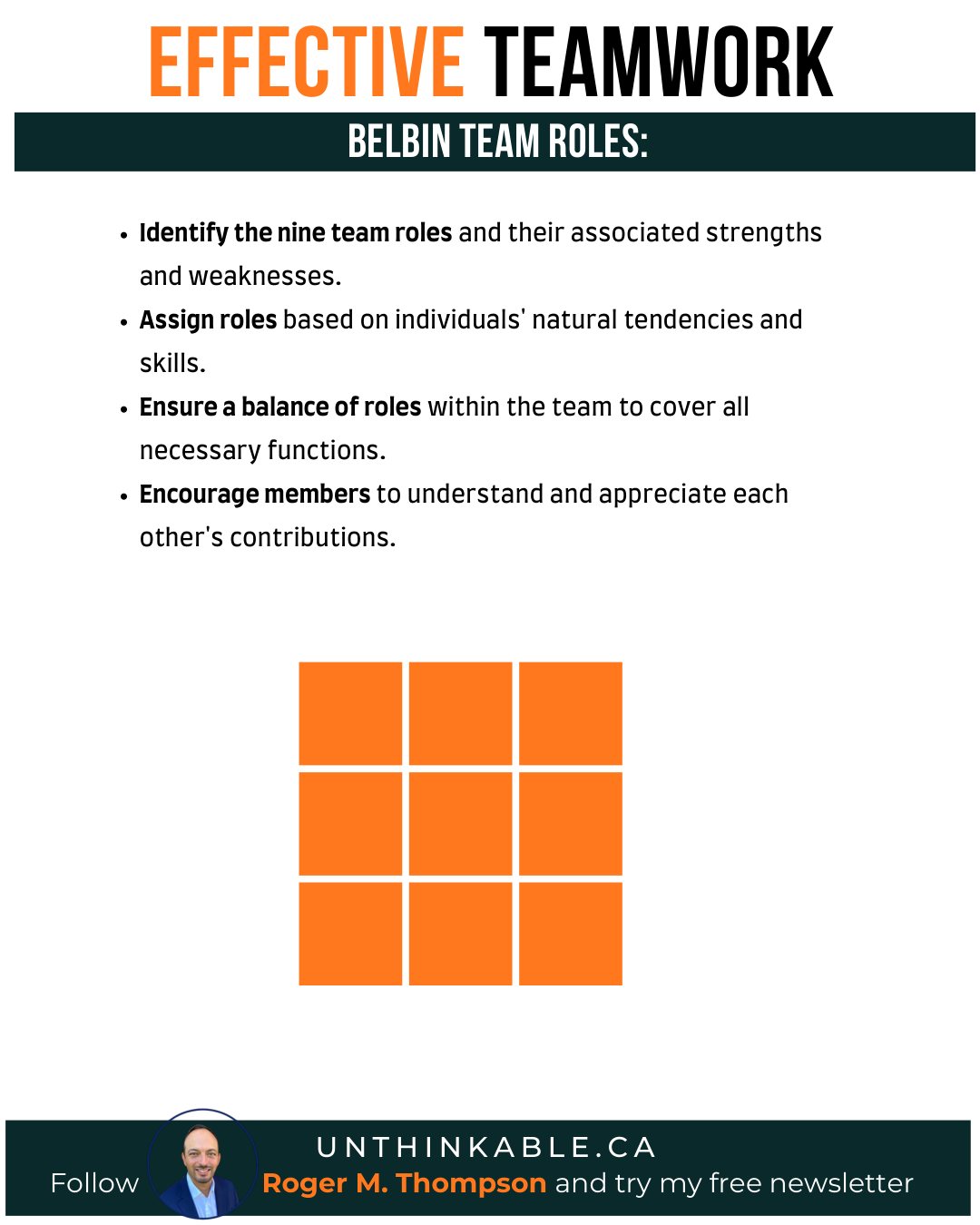
Page 5. Follow Roger M. Thompson and try my free newsletter U N T H I N K A B L E. C A EFFECTIVE TEAMWORK BELBIN TEAM ROLES: Identify the nine team roles and their associated strengths and weaknesses. Assign roles based on individuals' natural tendencies and skills. Ensure a balance of roles within the team to cover all necessary functions. Encourage members to understand and appreciate each other's contributions.
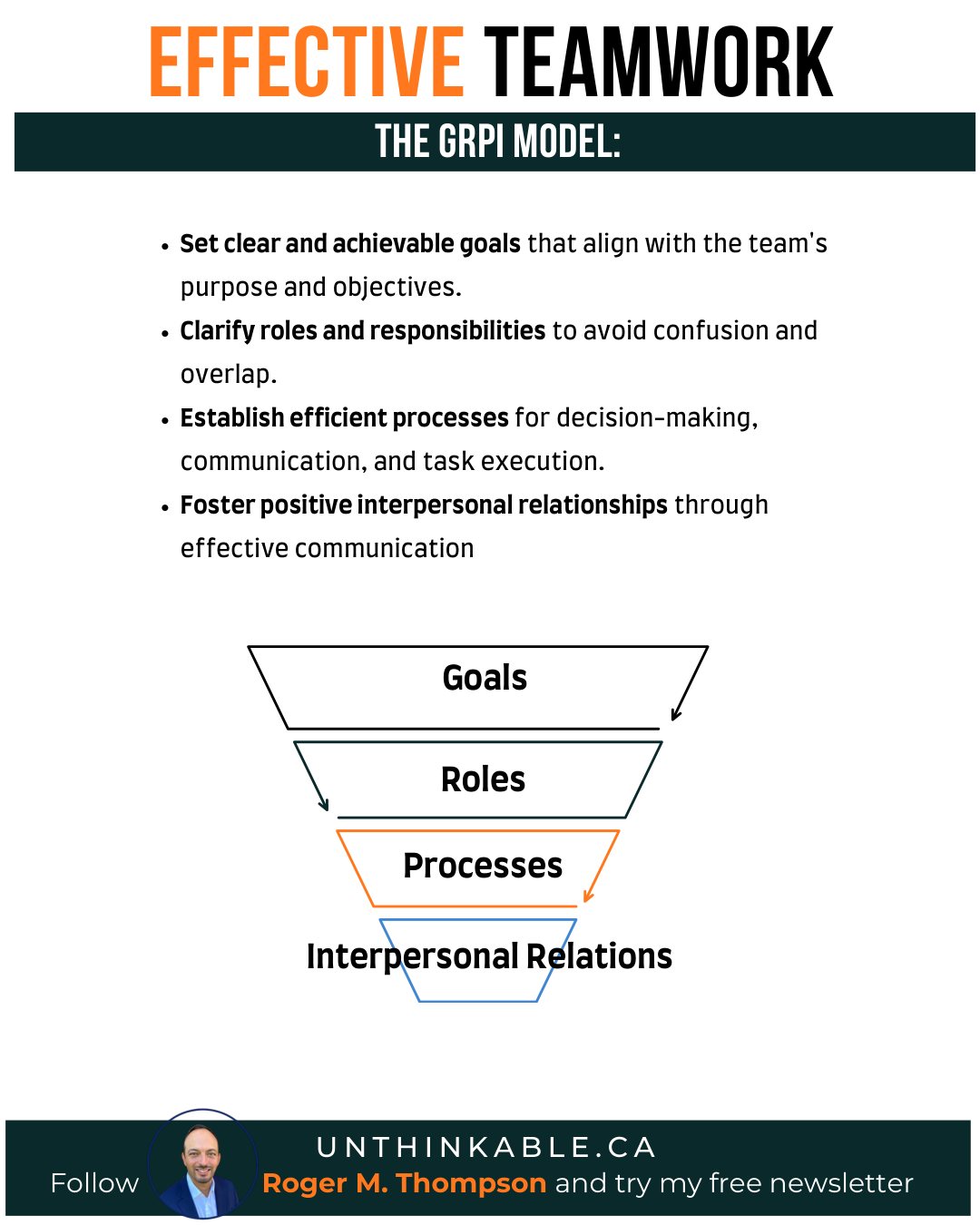
Page 6. Follow Roger M. Thompson and try my free newsletter U N T H I N K A B L E. C A EFFECTIVE TEAMWORK THE GRPI MODEL: Set clear and achievable goals that align with the team's purpose and objectives. Clarify roles and responsibilities to avoid confusion and overlap. Establish efficient processes for decision-making, communication, and task execution. Foster positive interpersonal relationships through effective communication Interpersonal Relations Processes Roles Goals
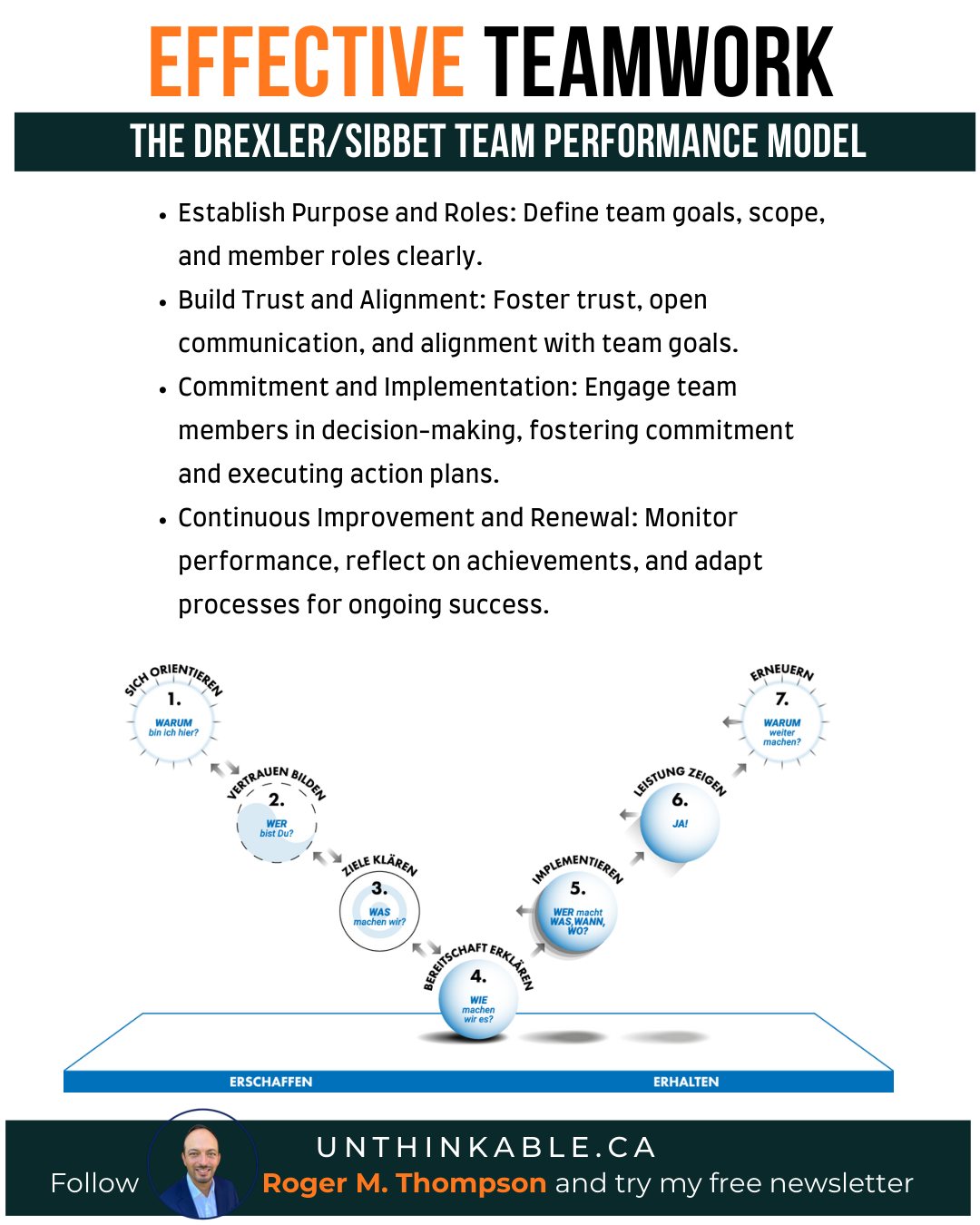
Page 7. Follow Roger M. Thompson and try my free newsletter U N T H I N K A B L E. C A EFFECTIVE TEAMWORK THE DREXLER/SIBBET TEAM PERFORMANCE MODEL Establish Purpose and Roles: Define team goals, scope, and member roles clearly. Build Trust and Alignment: Foster trust, open communication, and alignment with team goals. Commitment and Implementation: Engage team members in decision-making, fostering commitment and executing action plans. Continuous Improvement and Renewal: Monitor performance, reflect on achievements, and adapt processes for ongoing success.
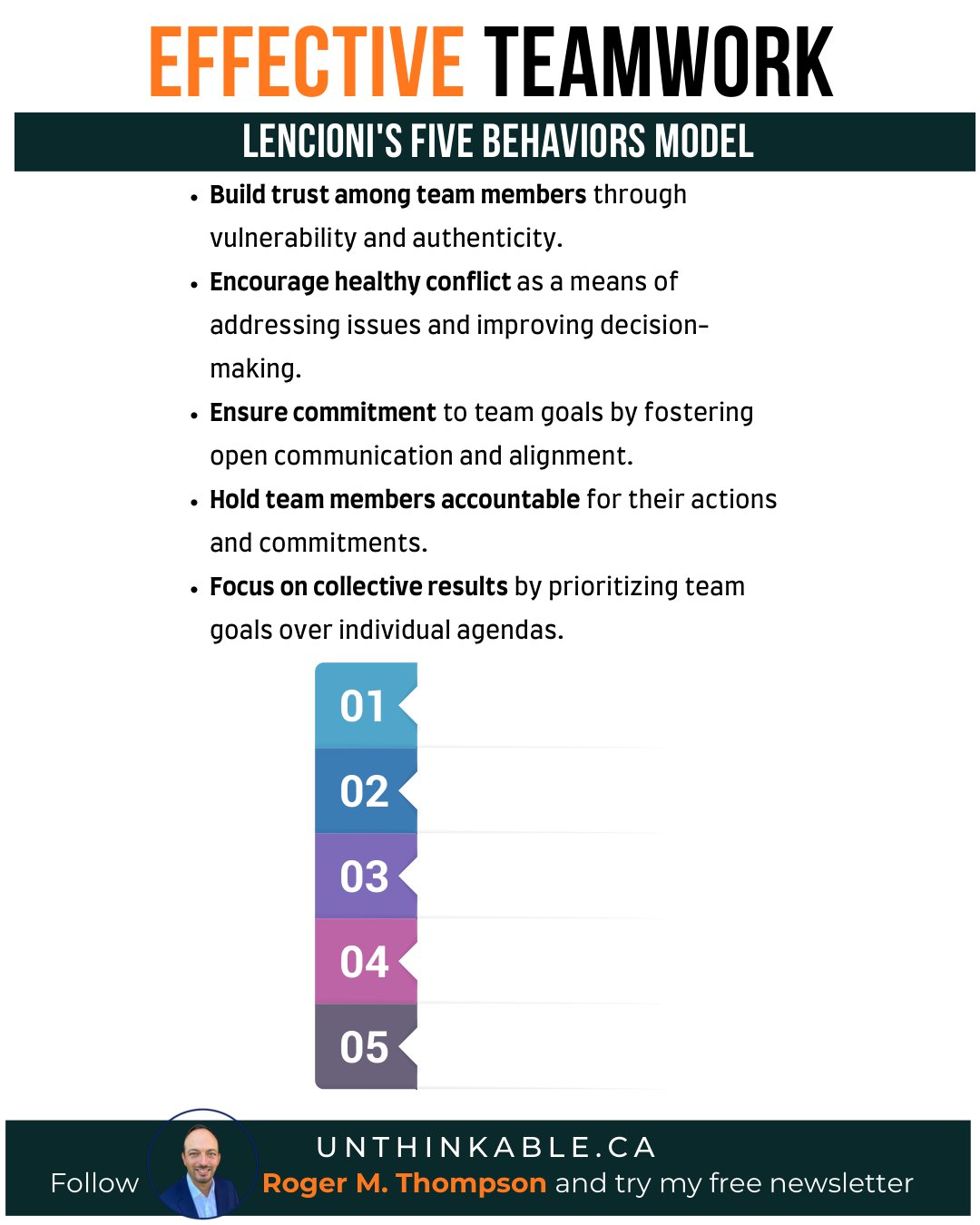
Page 8. Follow Roger M. Thompson and try my free newsletter U N T H I N K A B L E. C A EFFECTIVE TEAMWORK LENCIONI'S FIVE BEHAVIORS MODEL Build trust among team members through vulnerability and authenticity. Encourage healthy conflict as a means of addressing issues and improving decision- making. Ensure commitment to team goals by fostering open communication and alignment. Hold team members accountable for their actions and commitments. Focus on collective results by prioritizing team goals over individual agendas.
Page 9. Follow Roger M. Thompson and try my free newsletter U N T H I N K A B L E. C A EFFECTIVE TEAMWORK HACKMAN'S MODEL OF TEAM EFFECTIVENESS Define clear goals that are challenging Clarify team membership and roles, ensuring authority and responsibilities are clear Provide necessary support and resources Foster a supportive and respectful team climate that encourages collaboration and innovation.
Page 10. Sign up + get access to resources and free tools I am Roger. Management Effectiveness Coach Sharing knowledge about wealth which isn't just about financial prosperity. It's about enriching your mind, career, and time. www.unthinkable.ca
Source: Roger Mark Thompson on LinkedIn.