From Other Sources · Leadership & Work
Understanding Empathy: Why Leaders Need It
Shared from Asim Khaliq on LinkedIn
The picture in words
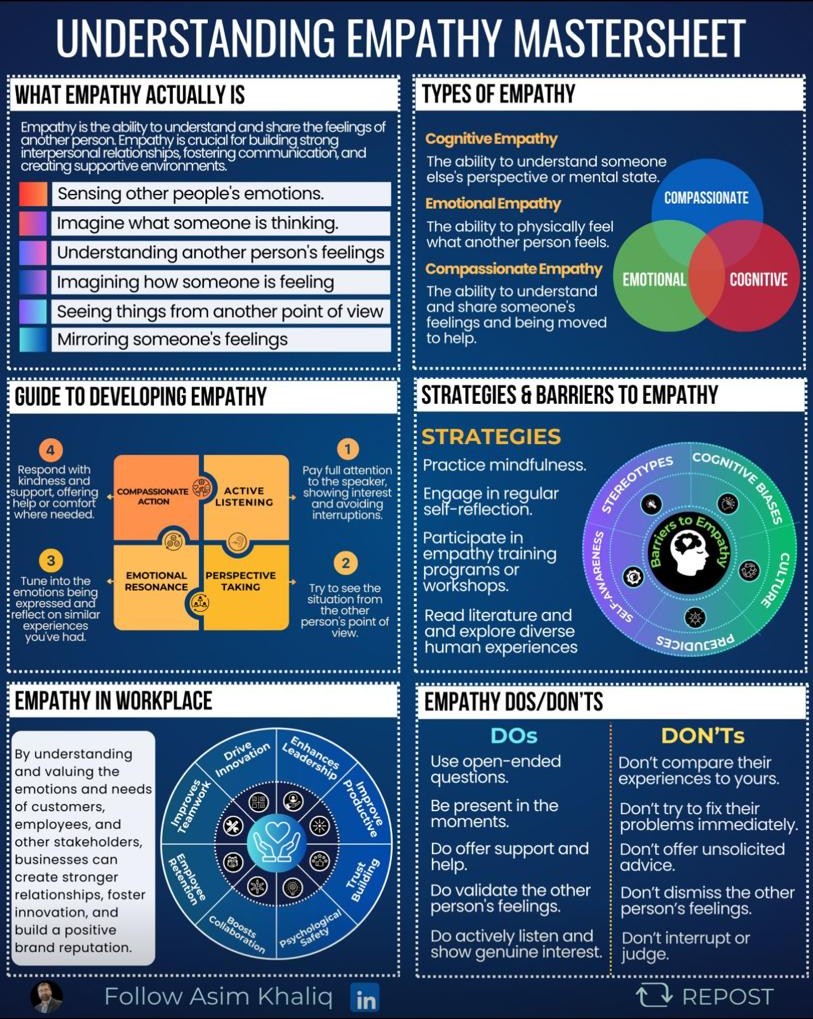
A six-panel sheet on empathy:
- What it is: understanding and sharing others’ feelings, from sensing emotions to mirroring them.
- Types: cognitive (seeing their view), emotional (sharing the feeling), compassionate (moved to help), in overlapping circles.
- Four steps to develop it: active listening, perspective taking, emotional resonance, compassionate action.
- Strategies (mindfulness, self-reflection, training, reading) beside a ring of barriers such as stereotypes, bias and prejudice.
- At work: a wheel of eight benefits, including innovation, psychological safety and retention.
- Dos and don’ts: ask open questions, validate feelings, listen; don’t compare, rush to fix, advise unasked, dismiss or interrupt.
These Stats Will Shock You:
In business, we often focus on improving innovation, employee retention, and productivity by seeking solutions elsewhere.
According to the 2023 Ernst & Young LLP survey, mutual empathy between leaders and employees leads to an increase in:
Efficiency (88%)
Creativity (87%)
Job satisfaction (87%)
Idea sharing (86%)
Innovation (85%)
Revenue (83%).
Think about these numbers.
As a leader, your ability to connect with your team on an emotional level can transform your workplace.
And it's not just about your internal team.
Understanding your customers' emotions can dramatically improve your relationships with them, increasing loyalty and satisfaction.
Many leaders focus heavily on their IQ, aiming to outthink their competitors.
The most successful leaders aren't just smart; they're emotionally attuned to the needs of their people.
Key takeaways for You:
Empathy is not optional; it's essential.
Let's reimagine your workplaces as communities built on emp …
Source: Asim Khaliq on LinkedIn.